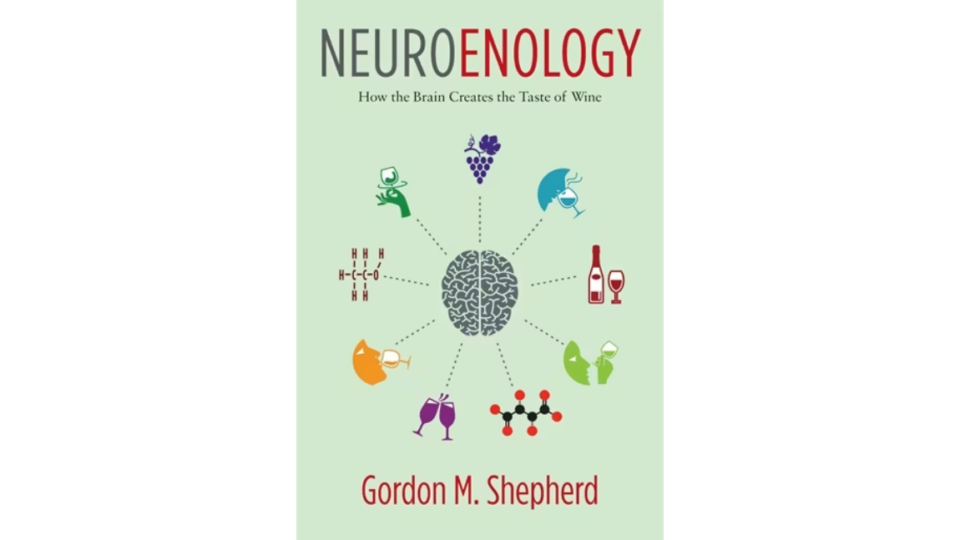
Neuroenology: How the Brain Creates the Taste of Wine
A book review
Most wine books invite you to swirl, sniff, and romanticize. Neuroenology: How the Brain Creates the Taste of Wine by Gordon M. Shepherd takes a completely different approach. Instead of poetry and tasting notes, Shepherd dives deep into the neuroscience behind every sip, exploring how our sensory systems and brain work together to create what we experience as flavor.
Before sitting down to read this book, I recommend pouring yourself a glass of wine. I found myself constantly wanting to take a sip and experience firsthand the sensory processes Shepherd describes. Since reading it, I’ve paid much closer attention to every step of tasting from lifting the glass to the movements of my tongue and throat, and even the airflow through my nose and mouth. Shepherd has a remarkable way of making you aware of processes that occur thousands of times a day without a second thought.
One of the most fascinating ideas appears early in the book: “The tongue movements involved in complex and systematic wine rating are likely to be more complex than those in the speech we use to communicate our perception of the wine we are tasting“ (p. 26). It’s a striking paradox. We spend so much time developing language to describe wine, yet the physical act of tasting may be even more sophisticated than the words we use to explain it.
In the second section, Shepherd meticulously explains the role of all five senses
- Sight: the label, bottle shape, and color of the wine
- Sound: the sounds created when wine is swished in the mouth
- Taste: the familiar sensations of sweetness, acidity, bitterness, and the role of saliva
- Touch: the mouthfeel and somatosensory sensations of wine
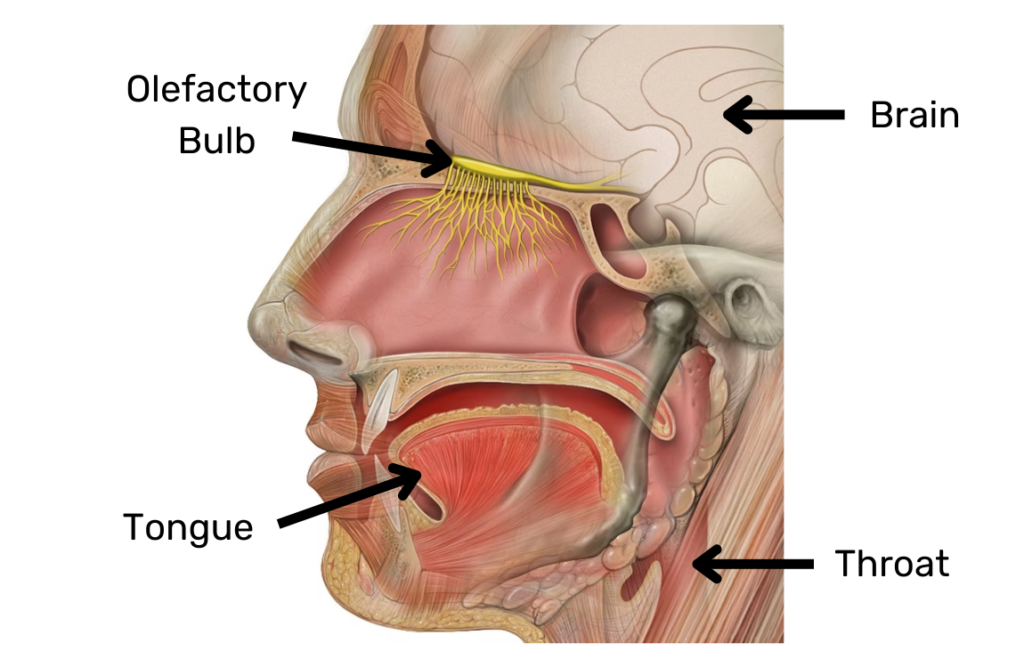
- Smell: the differences between orthonasal aromas (through the nose) and retronasal aromas (from the throat to the nose)
“There is a lot going on, which is why it can be claimed that the flavor of wine, like the flavor of food, engages more of our brain than any other human behavior.”
p. 57
The third part of the book focuses on the brain itself and the systems responsible for integrating all these sensory inputs into a unified experience. The discussion extends beyond wine and into broader questions about how humans perceive the world around them, while encouraging readers to consider how small changes in technique or awareness might enhance the enjoyment of a glass of wine.
If it wasn’t already giving off this vibe, this is not a light beach read. Shepherd is clearly a scientist who loves data, research, and evidence. While he does an admirable job making complex topics approachable through analogies and real-world examples, the book is still very, very dense with neuroscience and medical terminology. There were sections that felt repetitive and, at times, a bit dry. Readers looking for stories about vineyards, winemakers, or tasting adventures may find themselves struggling.
However, for the oenologically curious reader, I would say Neuroenology is well worth the read. I particularly appreciated Shepherd’s references to published research, his careful explanations, and his willingness to support claims with evidence rather than anecdote. The book offers a fascinating scientific perspective on an experience that is more often described through romance and emotion than through biology and neuroscience.
Happy Reading!
Shepherd, G. M. (2015). Neuroenology: How the brain creates the taste of wine. Columbia University Press.

Gordon M. Shepherd was a professor of neuroscience at the Yale School of Medicine and former editor in chief of the Journal of Neuroscience. His research centered on the olfactory system, and he was an early adopter of new techniques, playing a leading role in developing several neuroscience subfields, including computational neuroscience, neuroinformatics, cognitive neuroscience, and what he termed “neurogastronomy.” That term became the title of his earlier book, and helped spark the founding of the International Society of Neurogastronomy, which he established along with several colleagues.