
Tartrate Stabilization: Your Guide to CELSTAB™ and MANNOSTAB™
Laura Cypress, East Coast and Midwest Technical Winemaker, LAFFORT USA
Ready or not, stabilization and bottling season is here! If you hate being surprised when your perfectly crafted bottle throws tartrates or hazes, leave the testing to Imbibe Solutions while you focus on fixing that leaky filler head on the bottling line!
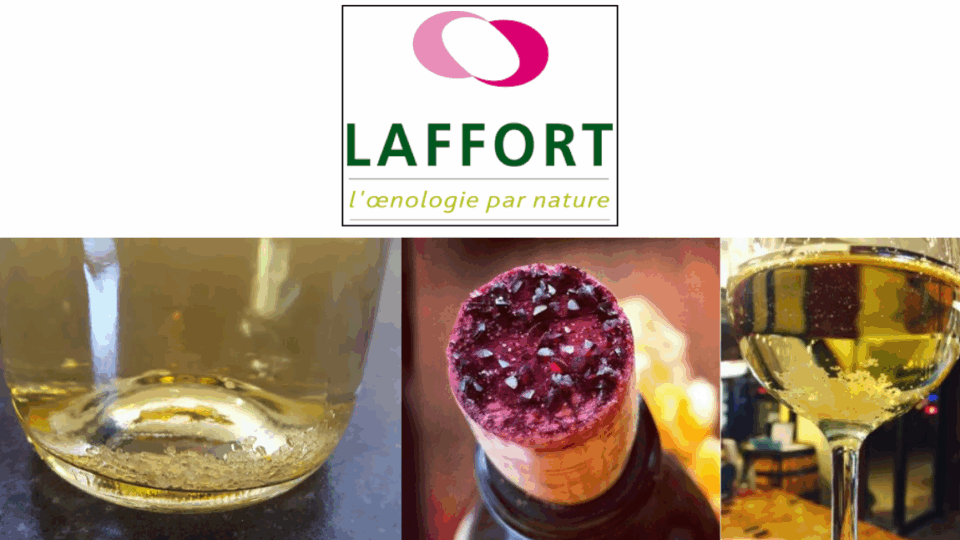
Tartrate crystals are a completely natural occurrence in wine but they can deter consumers when they appear in the bottle. Traditionally, cold stabilization through seeding and chilling has been the go-to method to precipitate out these tartrates onto the side of the tank. However, newer technologies now offer significant savings in both time and energy.
Whether you’re a large facility looking to turn tanks quickly or a smaller winery without chilling capacity, additive solutions like CELSTAB™ and MANNOSTAB™ Liquide offer efficient, non-subtractive alternatives to cold stabilization. If you’re curious about how these technologies work and what testing is required, your LAFFORT® representative (that’s me!) and the team at Imbibe Solutions are here to guide you every step of the way.
What’s the difference between CELSTAB™ and MANNOSTAB™ Liquide?
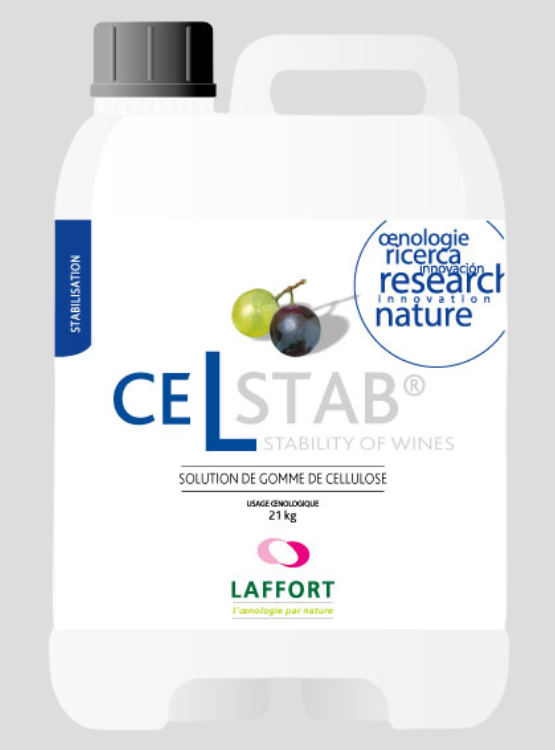
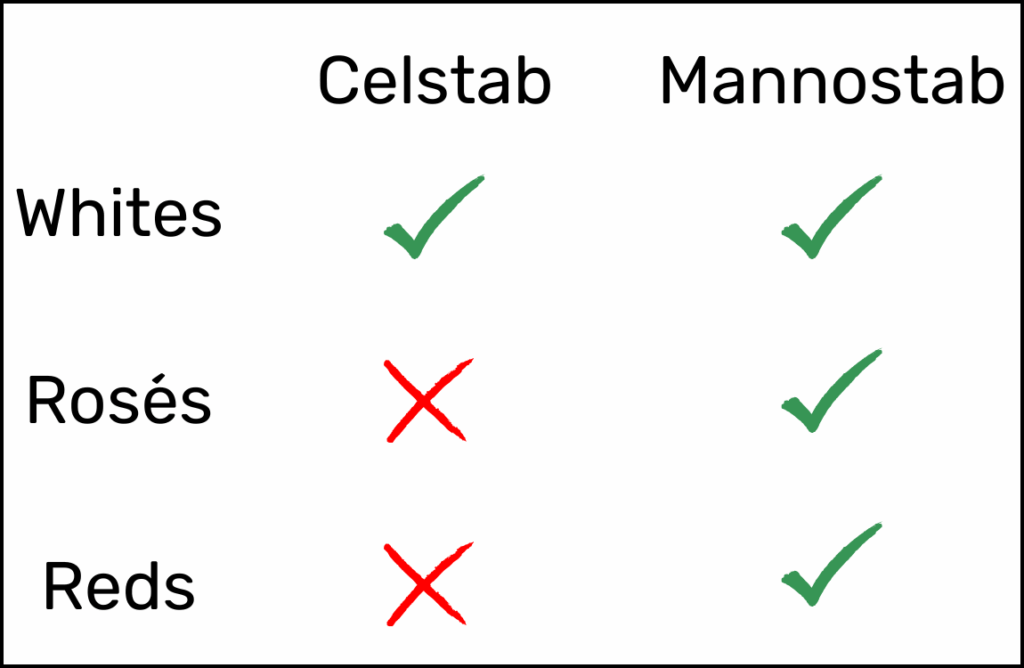
CELSTAB™ is a liquid carboxymethyl cellulose (CMC) solution that prevents the formation of large, insoluble tartrate crystals. It functions as a protective colloid, blocking nucleation sites where crystals begin to grow. Because it can interact with proteins (including Lysozyme), CELSTAB™ is recommended only for white and color-stable rosé wines that are already protein-stable. It should not be used on reds, as it can react with unstable color compounds.
MANNOSTAB™ Liquide, on the other hand, is composed of specific mannoproteins isolated from yeast cell walls. It also inhibits tartrate crystallization but can be used on white, rosé, and red wines. Unlike CELSTAB™, MANNOSTAB™ does not react with unstable proteins, making it an ideal choice for wines that are not protein-stable. However, it does not stabilize proteins—so a protein-unstable Sauvignon Blanc, for example, could still form a haze in bottle later due to heat exposure.

When do I add it?
Both CELSTAB™ and MANNOSTAB™ should be added after cellar filtration (such as crossflow or plate-and-frame) and before final bottling filtration.
- CELSTAB™: Add at least 12 hours before bottling, ideally 24 hours
- MANNOSTAB™ Liquide: Add at least 24 hours before bottling.
With both, be sure to mix thoroughly to ensure complete homogenization throughout the tank with a pump over, long enough to turn over 1.5x the volume of the tank.
How much do I add?
- CELSTAB™: 1 mL per liter of wine (or 1 gallon per 1,000 gallons).
- MANNOSTAB™ Liquide: Between 0.5 and 1.5 mL per liter of wine, depending on your lab results and stability needs.
NOTE: MANNOSTAB™ Liquide is more expensive than CELSTAB™, so confirming the lowest effective dose through laboratory testing is worthwhile.
What testing is required before using CELSTAB™ or MANNOSTAB™?
Testing ensures your wine is compatible with either product:
Blending two stable wines does not guarantee a stable blend.
- For CELSTAB™:
- The wine must be protein-stable before addition. If not, a protein haze may form.
- If you’ve recently added tannins, acid, or blended another lot, recheck protein stability—blending two stable wines does not guarantee a stable blend.
- For MANNOSTAB™:
- Protein stability is not required, as the product won’t cause a haze even in the presence of unstable proteins.
- For Both: Tartrate Stability Testing:
- Confirm that your wine can be stabilized with CELSTAB™ or MANNOSTAB™. Send samples to a lab for a CheckStab Mini Contact Test, which is a conductivity test that assures cold stability. This method is more accurate than a “freeze test.”
Imbibe Solutions offers convenient panels!
Send them a finished wine blend, and they have a panel that includes:
• Heat Stability
• Cold Stability (with and without CELSTAB™ or MANNOSTAB™)
• Dose-rate determination for MANNOSTAB™
• Optional Color Stability for rosé wines
Eek!! I added CELSTAB™ and I got a haze! What now?
If your wine is not protein stable, a protein haze may appear when CELSTAB™ is introduced. It’s not catastrophic—it can be filtered out—but it’s an unnecessary hassle, so plan accordingly, and always ensure your heat stability before adding CELSTAB™. Check your cold stability again, and add more CELSTAB™ if necessary.
Will CELSTAB™ or MANNOSTAB™ affect filterability?
No – neither product impacts filterability. Both are designed to be used prior to bottling without interfering with final filtration steps.
Why are these alternatives more cost and energy efficient than traditional chilling?
The energy costs of chilling a tank below 32 degrees for weeks at a time are a huge burden on a winery and the environment (unless you have an entirely solar-powered winery, in which case, awesome!!!) Using CELSTAB™ or MANNOSTAB™ saves time by avoiding that multiple-week chilling period below 32 degrees, allows you to turn over tanks faster, saves money and fossil fuels by keeping your chiller turned off. Not to mention – hot water, the caustic, and the labor necessary to clean those tartrates off your tanks. At just $22.00 for a one liter bottle of CELSTAB™, which treats 1,000 L (264 gallons) of wine, that’s no brainer! MANNOSTAB™costs a bit more—around $127.00 for a 1L bottle, but for those looking for peace-of-mind that they won’t get a protein haze from stability addition, its well worth it.
When would you use MANNOSTAB™ instead of CELSTAB™?
- High-protein white varietals where you don’t want to run the risk of unstable proteins interacting (looking at you, Sauv Blanc, Pinot Gris and Gruner Vetliner!)
- If your wine is not heat stable and you do not have time to heat stabilize it before bottling or you do not want to alter the aromatics with bentonite
- Sparkling base wines if you choose not to heat-stabilize your base wine
- If the labor costs and wine loss of adding more bentonite and racking it make it preferable to use MANNOSTAB™
- You have a chillable red, or a red wine that has a history of tartrate instability after bottling
Help! My wine didn’t pass the CheckStab test!
Don’t worry—some varietals, especially hybrids, can be more prone to instability. You can partially chill the wine for a few days to drop out some tartrates, then re-test with CELSTAB™ or MANNOSTAB™. Even this partial chilling approach saves significant time and energy compared to full cold stabilization.

Can I use CELSTAB™ or MANNOSTAB™ as a back-up on my traditionally cold stabilized wines?
Absolutely. Many winemakers use these additives as a belt-and-suspenders approach—combining light chilling with additive stabilization for extra assurance against in-bottle crystallization.
Can I add anything else in conjunction with CELSTAB™ or MANNOSTAB™?
CELSTAB™ or MANNOSTAB™ should be the last things you add before your bottling. The only other products that can be added in conjunction with CELSTAB™ or MANNOSTAB™ are SO2, CO2, Ascorbic Acid, and STABIVIN (Gum Arabic).
Do you have more technical information about these products?
Yes! Please check out the CELSTAB Checklist and MANNOSTAB Manual – note that in the USA We only offer MANNOSTAB™ Liquide not the granular MANNOSTAB.
This season, consider how much energy (and money) goes into chilling tanks for tartrate stability – could be worth trying something new! It’s a lot of information at first, but once you get the hang of it, you’ll be cruising through bottling season with ease.
To learn more or to discuss testing, contact me!
Laura Cypress – LAFFORT® USA—Technical Winemaker, East Coast and Midwest
[email protected] 707-787-0974