
Beer Contamination: Causes, Prevention & How to Test For It
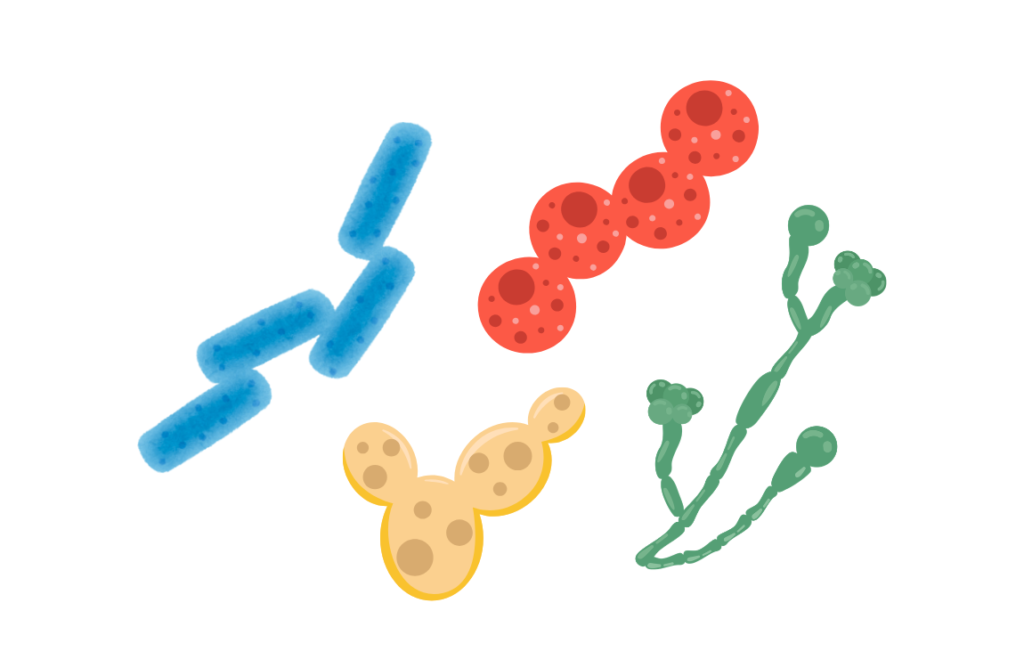
Contamination in beer is caused by unwanted microbes — bacteria, wild yeast, or mold — that produce off-flavors like rotten egg, sour, buttery, phenolic, or moldy character. It’s most commonly traced to draft lines – since they’re the least disassembled/cleaned/sanitized and monitored point in a brewery – but the same microbes can take hold just as easily in a dirty tank, transfer hose, packaging line, or other piece of cold-side equipment. Looking at you, heat exchanger!
What Are the Signs of Contaminated Beer?
Smell and taste are the quickest way to identify a contaminated beer. If you work in a brewery QC lab, it will also be pretty clear when an agar plate or PCR test come back with abnormal results. On rare occasions, excessive foaming or an exploding can/bottle will indicate contamination by a wild yeast that went on a secondary fermentation spree.
Quick facts:
- Off-flavors and aromas, like:
- Rotten eggs — hydrogen sulfide
- Diacetyl — buttery, butterscotch
- Sour — vinegary, tart
- Phenolic — medicinal, band-aid
- Moldy — musty
Contamination happens to the product. Infection happens to the person.
Is Contaminated Beer Dangerous to Drink?
Usually not — but it depends on the beer.
Most contaminating microbes are simply spoilage organisms, not pathogens: they ruin flavor, clarity, and body. Alcohol, hop compounds, and low pH keep them from posing a real health risk in a standard beer.
NoLo beer is the exception. Strip out the alcohol and you strip out one of the beer’s built-in defenses. A contaminated NoLo isn’t just a flavor problem – it’s a pathogen problem, and it calls for a higher sanitation standard than a standard beer. This is extremely important when considering putting a NoLo on draft.
What Causes Beer Contamination?
Nearly every cause traces back to one thing: poor sanitation. This applies wherever beer sits or moves post boil — draft lines, transfer hoses, tanks, fillers, kegs, etc. So, what does a brewer need to consider when addressing a contamination issue?
- Bad sanitation practices — under-dosing sanitizer, skipping disassembly, or rushing a clean
- Dead ends — in draft couplers, tank fittings, sample ports, or hose connections, where cleaning flows never fully reach
- Shadows — shaded or low-flow zones inside any equipment that stay warm and wet
- Dirty equipment — inconsistent or skipped cleaning schedules on draft lines, hoses, or fillers
- Biofilms — hard to remove films that harbor microbes
Draft systems and heat exchangers are the most common sources of contamination in wort and beer.
What Microbes Cause Beer Contamination?
- Acetobacter — vinegar/sour character, often tied to oxygen exposure
- Hop Resistant-Lactobacillus — sour, acidic, hazy
- Hop Resistant-Pediococcus — sour, acidic, buttery, viscous/ropy
- Wild yeast (Brettanomyces, wild Saccharomyces, etc.) — phenolic, buttery, rotten egg, over-attenuation
- Mold — musty character, earthy
- Pectinatus — sour, cheesy/sweaty, rotten egg, hazy
- Megasphaera — rancid, cheesy/sweaty, hazy
- Gluconobacter — vinegar
Most of these are opportunists. They don’t need much to establish a foothold, so it is important to stay on top of strict cleaning regiments and sanitation.
How Do You Prevent Beer Contamination?
Prevention comes down to four habits:
- Having a cleaning schedule. It seems obvious, but regular cleaning and sanitizing is vital to the cleanliness of your beer. Everything from the heat exchanger to the cans/bottles, kegs, draft lines, and taps needs to be cleaned. Growth happens quickly – don’t let it get ahead of you.
- Remove all particulates and films BEFORE sanitizing. Sanitizer doesn’t work through soil – sanitizing over residue (including biofilms) cleans nothing. Acid and caustic cycles must be run first to remove organic and inorganic particulates. Once the equipment is actually clean, an SIP can be run.
- Replace old soft parts. Gaskets and O-rings degrade, crack, and harbor biofilms in ways that resist cleaning. It is recommended that they are replaced on a schedule that reflects their level of usage.
- Minimize air exposure. Oxygen ingress rapidly promotes Acetobacter and Gluconobacter growth (in addition to accelerating staling). Best to just avoid it.
How Do You Test for Beer Contamination?
A brewery quality control program often layers multiple methods to validate cleanliness:
Agar plating isolates and identifies specific organisms:
- WLD (Wallerstein Laboratory Nutrient with Cycloheximide) — grows everything except S. cerevisiae, useful for spotting wild contaminants against a “clean” background
- UBA (Universal Beer Agar) — includes beer in the media itself, a solid general-purpose tool for brewery microbiological control
- HLP (Hsu’s Lacto and Pedio) — targeted detection of Lactobacillus and Pediococcus
- LCSM (Lin’s Cupric Sulfate Medium) — selective/differential agar for non-Saccharomyces wild yeast and Saccharomyces cerevisiae var. diastaticus
- LWYM (Lin’s Wild Yeast Differential Medium) — uses crystal violet to suppress brewery culture yeast while letting many wild yeasts grow through
Broths give a faster yes/no read:
- NBB (Nutrient-Brewers-Bacteria) Broth — detects Lactobacillus, Pediococcus, Pectinatus, and Megasphaera via a visual color change, without differentiating which one is present
PCR identifies specific organisms at the DNA level — faster and more precise than culturing, though it doesn’t confirm viability or quantity.
ATP testing measures general biological residue on surfaces in real time — it won’t identify an organism, but it’s the fastest way to confirm equipment is actually clean before sanitizing.
FAQ
What does contaminated beer taste like? Rotten egg, sour or vinegary, buttery, phenolic (medicinal), or moldy — the specific off-flavor usually points toward the microbe responsible.
Is contamination the same as infection? No. Contamination happens to the product – it’s a flavor and quality issue. Infection happens to a person, which is a health and safety issue. Most contaminated beer is safe but tastes bad.the exception is NoLo beer, where the alcohol-based safety barrier is reduced.
Why are draft lines so prone to contamination? The necessity for regularly cleaning draft systems is often overlooked by brewers, bars, and restaurants alike. Unlike tanks, cans, or bottles, these lines are frequently opened to the environment – making them a prime location for microbial growth. They may have stagnant beer, are rarely disassembled, and contain plenty of nooks and crannies where beer residue can build up. Couplers, faucets, gaskets, and fittings can harbor microorganisms and support biofilm formation. Once established, these biofilms can continually contaminate beer passing through the system, making regular, effective cleaning essential.
What’s the best way to test for contamination in a brewery? No single method covers everything, but the most comprehensive is agar plating which can identify specific organisms and provide a total colony count. In addition to plating, broths give a fast yes/no read for select organisms, PCR confirms identity at the DNA level, and ATP testing verifies a surface is actually clean before sanitizing. Need help? We’d be happy to assist!