
Why Isn’t My pH Probe Reading Correctly? A Complete Troubleshooting Guide
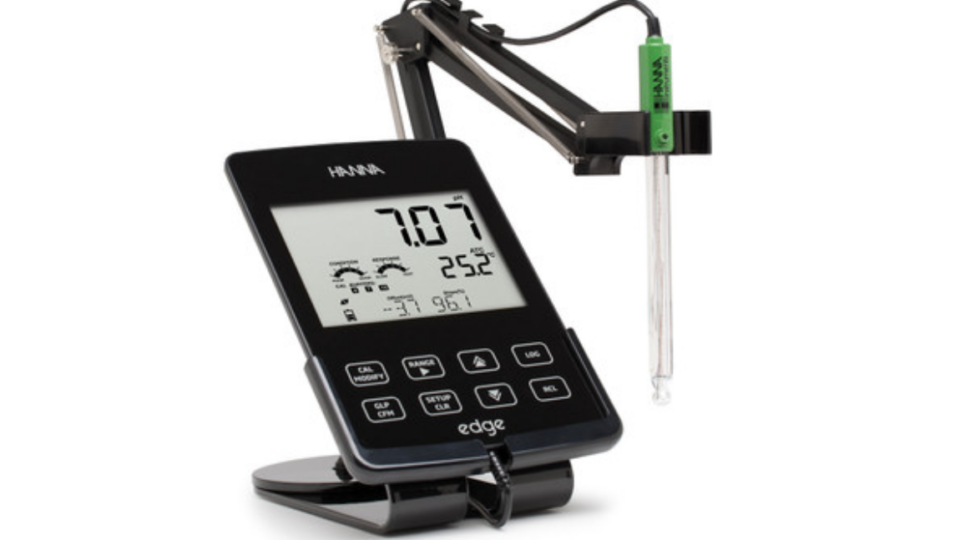
Most pH probe troubleshooting comes down to three things: a clogged or dying junction, depleted or contaminated fill solution, or calibration technique errors. This guide walks through diagnosis and fixes for each, plus the maintenance habits that prevent them in the first place.
How Often Should You Calibrate a pH Probe?
Standardize with 2–3 buffers before every use. No exceptions.
A trick that saves money on buffer stock: pour a small portion of each buffer into a sample tube and use that portion for calibration until your slope (more on this below) drifts outside normal range. Then refresh the tube from your bulk buffer supply. You’re not contaminating your main stock every time you calibrate.
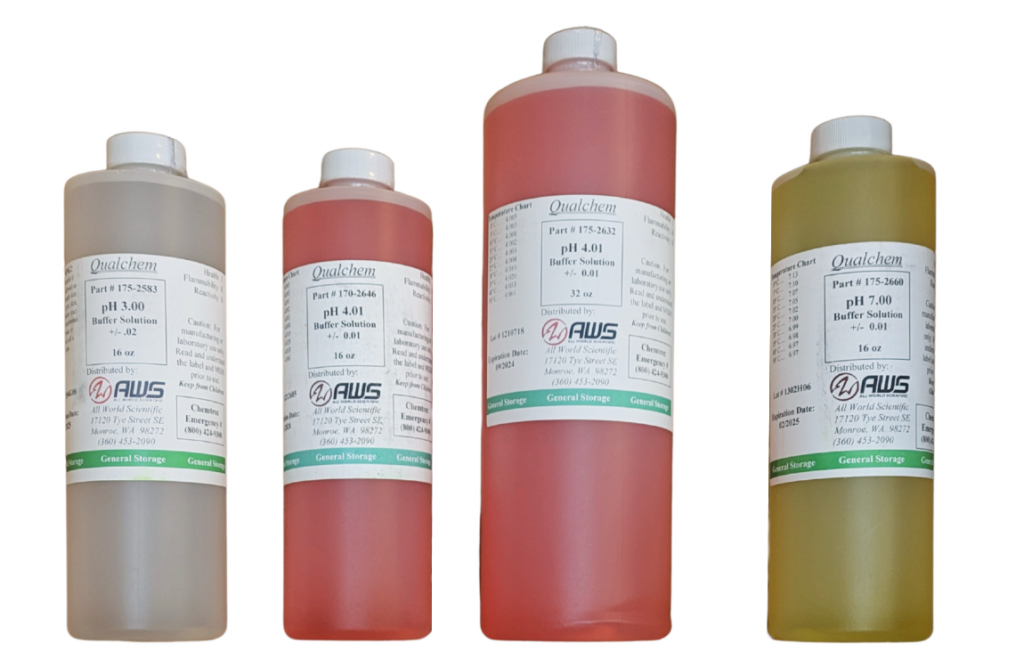
Bracket your actual sample range. For most fermented beverages, pH 4 and 7 buffers cover it. If your meter accepts a third point, add pH 3 — not every meter will, but if yours does, it’s worth it since most fermented beverages fall closer to 3–4 than to 7. The standard three-point set of 4/7/10is fine if you’re not fine-tuning for low-pH samples specifically.
Match buffer temperature to sample temperature. Calibrating with room-temp buffers and then measuring a cold sample introduces error before you’ve even started.
Slope % is your health checkpoint. 94–102% is normal after a fresh calibration. If you’re outside that range, refresh your buffers and fill solution (if your probe uses one), clean the probe, and recalibrate. Still outside range after that? Your probe likely needs replacing — see the replacement section below.
What’s the Right Way to Store a pH Probe?
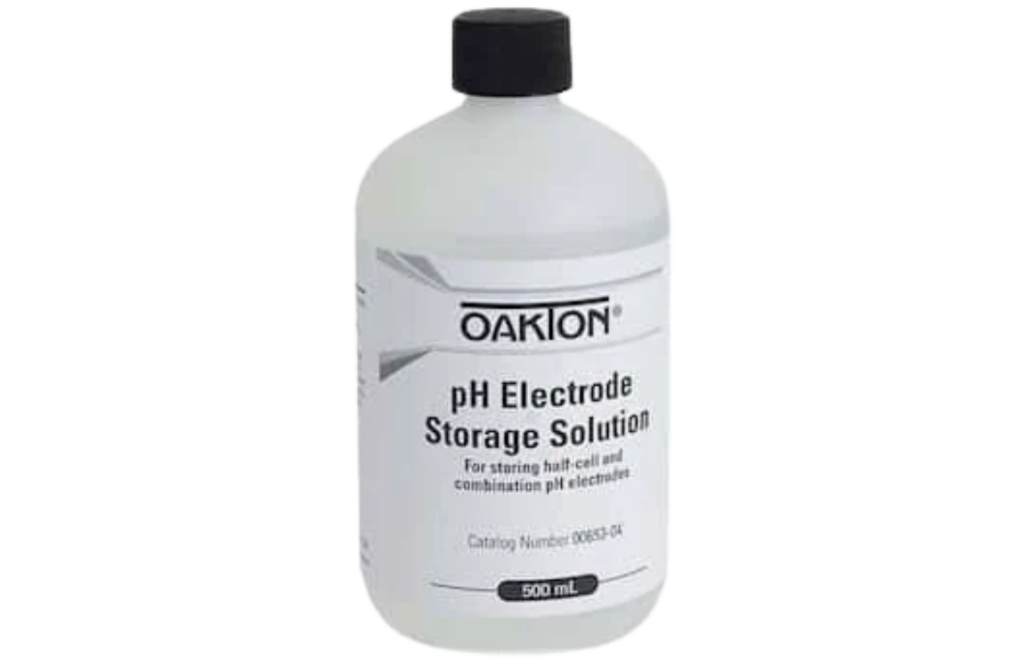
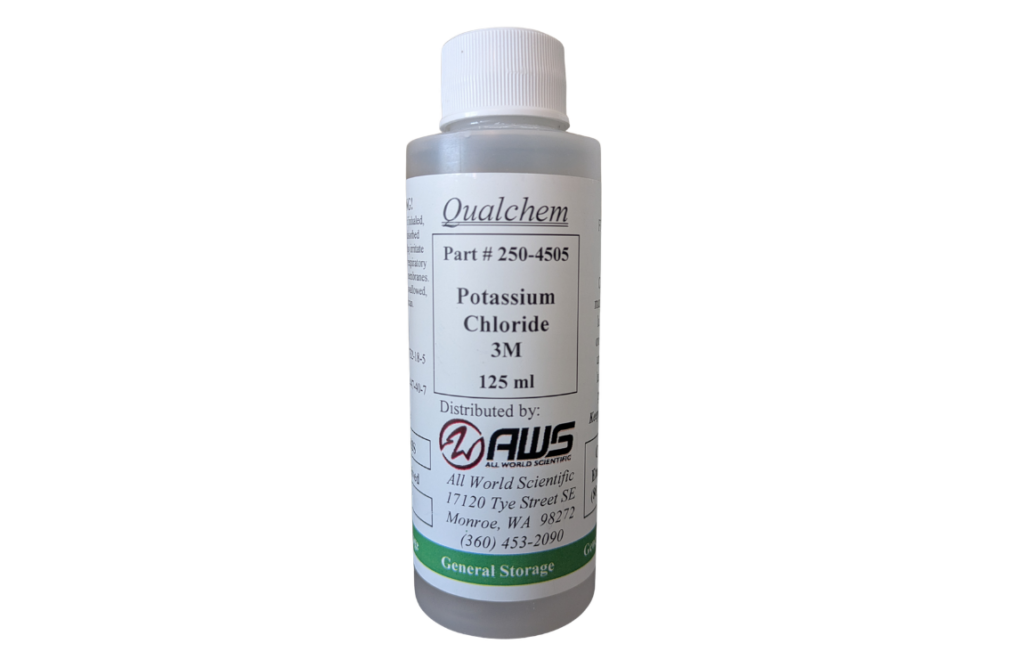
Storage solution only. Never DI water, never tap water, never buffer solution, and never dry! Use a 3M to 4M potassium chloride (KCl) solution — that’s it.
Why DI water kills probes: ions move from high concentration to low concentration to reach equilibrium. DI water has essentially zero ion concentration, so it pulls KCl straight out of the reference junction. Store a probe in DI water and you’re actively draining the thing that makes it work.
How Do You Know If a pH Probe Is Reading Accurately?
Use an external control to check accuracy of you pH probe. Cream of tartar is a cheap, stable external control to run between calibrations and multiple samples.
Combine 50 mL of DI water with roughly 2 g of cream of tartar to create an oversaturated solution. Oversaturated, it will always read 3.56 pH. Keep it mixing while you measure — if your reading is off from 3.56 pH, you know something’s wrong before you’ve wasted time on a full sample run.
Do You Need a Stir Plate to Measure pH?
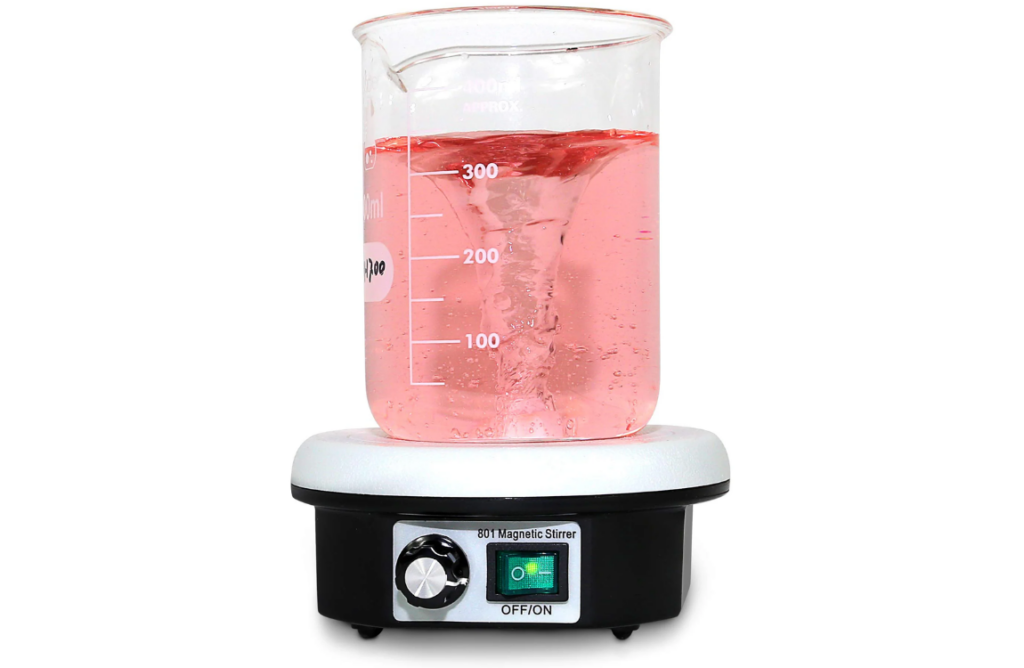
Ideally, yes. The probe measures ion activity in the sample compared to an internal standard. Without mixing, it’s only reading the ions immediately touching the probe tip — not the sample as a whole. Mixing ensures homogeneity, which is what makes the reading meaningful.
No stir plate on hand? Gently swirling the sample works, as long as the probe stays fully submerged throughout.
Why Use a Double-Junction Probe for Wine, Beer, or Cider?
Single-junction probes are economical and fine for clean, simple samples like water — but they clog quickly in protein-, sugar-, tannin-, or sulfide-heavy matrices, which describes most fermented beverages.
The design difference:
- Single junction: one reference wire (typically Ag/AgCl) sits in an electrolyte solution that communicates with the sample through a single porous junction.
- Double junction: the reference wire sits in an inner chamber with its own barrier, nested inside a second outer chamber — usually filled with a silver-free electrolyte — that’s what actually contacts the sample.
What that means in practice: single-junction probes fail faster because silver ions can precipitate out and react with sulfides or proteins in your sample, clogging the junction. Double-junction probes buffer the reference electrode from that contamination, giving you longer-term stability and a longer working life in aggressive, real-world samples.
Refillable or Gel Probe — Which Should You Get?
Both work fine for fermented beverages and juice. The difference is maintenance and lifespan.
Refillable probes let you flush and replace the internal fill solution when it gets depleted or dirty, which extends the probe’s usable life. Used regularly, expect to replace a refillable probe annually.
Gel probes can’t be refreshed — once the internal gel is contaminated, you can’t get an accurate calibration anymore, and the probe needs replacing. Expect to replace these more frequently than refillable probes.
How Do You Clean a pH Probe?
Rinse with DI water between every sample to prevent cross-contamination. Never pat or wipe the bulb dry — this can damage or strip the sensing surface.
Deep clean protocol:
- Use an alkaline pH probe cleaning solution (available from most lab suppliers). Follow the product’s instructions, but generally: soak for no more than 2 minutes.
- Rinse with DI water.
- Neutralize with an acid — your fermented beverage sample itself works perfectly for this.
- If you’re using a refillable probe, use a syringe or disposable pipet to remove the old fill solution, then a clean syringe/pipet to refill with fresh solution.
- After deep cleaning, let the probe sit in storage solution for 1 hour before attempting a calibration.
My pH Probe Dried Out — How Do I Revive It?
Don’t throw it out yet. Let it sit in 3–4M KCl storage solution for 1 to 24 hours before attempting to calibrate. If it’s a refillable probe, you may also need to top up or fully replace the fill solution depending on how dried out it got.
If it still won’t calibrate after 24 hours of rehydration, it’s time to replace it.
Why Is My pH Meter Drifting?
First, figure out if it’s actually drift or just a slow response — they look similar but mean different things.
- Drift: the reading keeps changing — up or down — over an extended period (minutes, hours, even days).
- Slow response: takes longer than 30–60 seconds to stabilize, but it does eventually settle.
Common causes of true drift: off-gassing CO2, a failing junction, depleted fill solution, or a temperature mismatch between your sample and your calibration.
If you’re measuring a carbonated sample, decarbonate it completely first. CO2 is acidic, and as it off-gasses, pH gradually rises over time — which looks exactly like drift but isn’t a probe problem at all.
If your sample isn’t carbonated and you’re still seeing drift, work through the cleaning protocol above before assuming you need a full replacement. Recalibrate ensuring the buffer temperature matches the sample temperature.
Why Is My pH Meter Reading Slowly or Erratically?
Slow response is usually clogged junction or low/dirty fill solution. Run the cleaning protocol above.
Erratic or jumpy readings usually point to an air bubble in the fill solution, a cracked bulb, or a broken internal wire. Try gently shaking the probe to clear a bubble, or replace the fill solution if that doesn’t do it. If there’s no bubble and the erratic behavior persists, the probe has likely been physically compromised — replacement is the fix.
What Does ATC Do, and Do You Need It?
ATC (Automatic Temperature Compensation) corrects for how temperature affects the probe’s electrical response — it does not correct your sample’s actual pH.
This distinction matters because ATC can mask a mistake you’re still making: if you calibrate with buffers at room temperature and then measure a cold sample, ATC will compensate for the probe’s behavior at that temperature, but it can’t account for the fact that pH itself is temperature-dependent in the sample chemistry. The reading can still be off. Equilibrating your sample to roughly the same temperature as your calibration buffers is still the safest practice, ATC or not.
When Should You Replace a pH Probe?
Replace when:
- Slope % is consistently below ~94%, even after cleaning and refreshing fill solution.
- The bulb or body is cracked or there are broken internal wires.
- The probe’s response time is getting too slow.
Expected lifespan: refillable probes used regularly on fermented beverages typically need replacing annually — the complex matrix and high acidity of these samples wears them down faster than clean water applications. Gel probes need replacing more often, depending on how frequently they’re used.
How Does a pH Probe Work?
Short answer: measurement of an electrical current created by a concentration difference in hydrogen ions in the sample solution vs the probe’s internal solution. The pH Professor on YouTube has a great detailed rundown.
pH Probe Troubleshooting Table
| Symptom | Likely Cause | Fix |
|---|---|---|
| Slow to stabilize | Clogged junction/ low fill solution | Clean junction, top off or replace fill solution |
| Erratic/jumpy reading | Air bubble, cracked bulb, damaged wires | Gently shake to clear bubbles; replace probe if damage persists |
| Drifting during use | Dirty junction, temp mismatch, depleted fill, CO2 off-gassing | Clean, re-equilibrate temperature, check fill level, decarbonate sample |
| Low slope % (<94%) | Aging/dying reference electrode | Replace probe |
| Reads fine in buffer, wrong in sample | Sample temp ≠ buffer temp, or matrix effect | Equilibrate temperature, verify with external control |
| Won’t calibrate at all | Dried-out junction | Rehydrate in storage solution 1–24 hrs, retry |
| Cream of Tartar doesn’t read 3.56 +/- 0.02 pH | Old buffer, dirty junction, low fill solution | Renew buffers and recalibrate, clean junction, top off or replace fill solution |
FAQ
How often should I calibrate my pH probe?
Before every use, with a minimum of 2 buffers.
Can I store my pH probe in tap or DI water?
No. Use a proper 3–4M KCl storage solution — DI water strips ions out of the reference junction through osmosis.
What’s a normal slope percentage for a pH probe?
94–102% after a fresh calibration.
How do I know if my pH probe is reading accurately?
Run an external control between calibrations and periodically between samples. An oversaturated cream of tartar solution (roughly 2 g in 50 mL DI water) always reads 3.56 pH — if your probe reads off from that (more than +/- 0.02), it is time to do some troubleshooting.
What kind of probe do I need for my wine, beer, or cider?
A refillable, double-junction probe with ATC is ideal. Fermented beverages are protein-, tannin-, and sulfide-heavy, which fouls single-junction probes fast — the double junction protects the reference electrode, and refillable means you can flush and replace fill solution instead of replacing the whole probe.
Why is my pH meter drifting?
Drift is a continuous change in reading over minutes, hours, or days — different from a slow response that eventually settles. Common causes are off-gassing CO2 in carbonated samples, a dirty junction, depleted fill solution, or a temperature mismatch between your sample and calibration. Decarbonate carbonated samples first, then run the cleaning protocol if drift continues.
Should the fill port be stoppered or unstoppered during measurement?
Unstoppered during measurement, stoppered during storage. Opening the port lets gravity create slight positive pressure, so fill solution flows out through the junction into the sample rather than sample wicking in — that outward flow keeps the junction clean and the reading stable. Stopper it back up between uses and during storage to slow evaporation and contamination of the fill solution.
Does ATC replace the need to equilibrate sample temperature?
No. ATC corrects the probe’s electrical response to temperature — not the sample’s actual pH at a mismatched temperature. Equilibrate your sample to your buffer temperature for the most accurate reading.