
Acetaldehyde in Beer: Causes, Green Apple Flavor & How to Prevent It
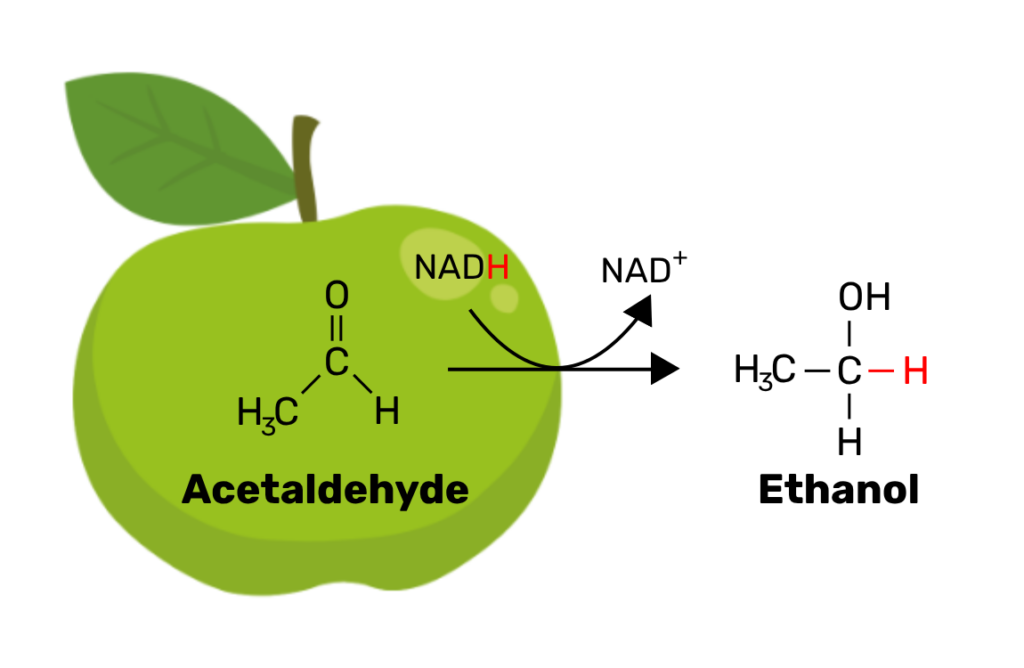
Acetaldehyde is the compound behind a green apple, pear, or fresh-cut-grass flavor in beer. It is a natural precursor to ethanol and its presence usually means the beer is too young or the yeast were stressed.
What Is Acetaldehyde?
Acetaldehyde is an intermediate compound yeast produce on the way to making ethanol. Healthy yeast convert nearly all of it into ethanol by the end of fermentation. When acetaldehyde lingers past that point, it’s a signal that fermentation or conditioning wasn’t finished — or that the yeast were under stress.
Quick facts:
- Flavor/aroma: green apple, pear, fresh-cut grass
- Sensory threshold: ~10 mg/L
- Chemical role: intermediate in ethanol formation
- Warning: acetaldehyde oxidizes into acetic acid (vinegar) if the beer is exposed to oxygen after fermentation
What Causes Acetaldehyde in Beer?
Nearly every root cause traces back to one thing: stressed or overactive yeast.
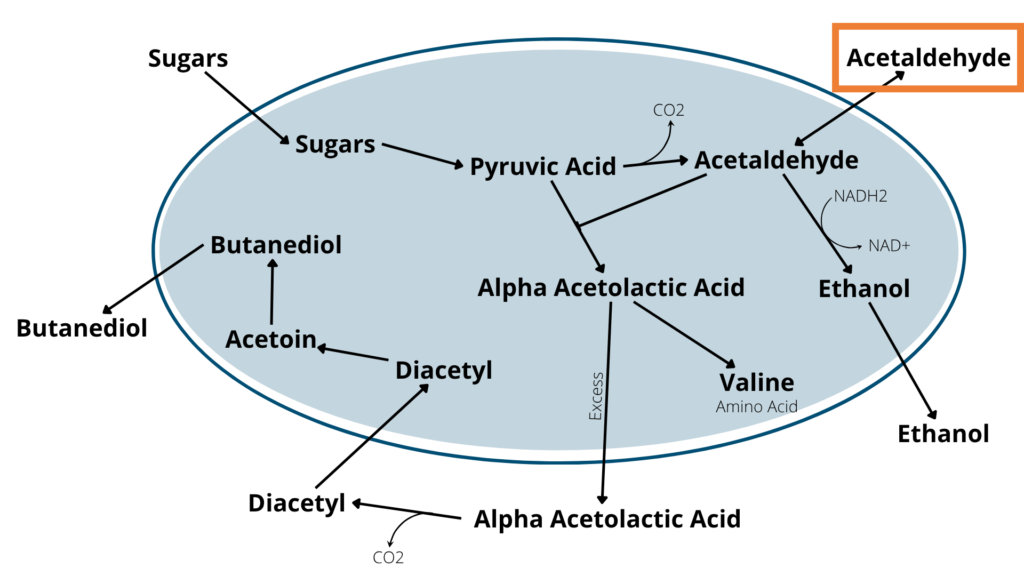
- Unhealthy yeast — insufficient nutrients, especially in high-adjunct beers
- Incomplete conditioning — the beer is too young; yeast haven’t had time to reabsorb and metabolize acetaldehyde
- Rapid, warm fermentation — fast fermentation produces acetaldehyde faster than yeast can clean it up before cell death
- Over-pitching — more yeast cells means more total acetaldehyde production
- Under-aeration — oxygen-starved yeast can’t fully metabolize acetaldehyde into ethanol
- Post-fermentation oxygen exposure — oxygen after fermentation encourages bacterial growth that can reverse the acetaldehyde-to-ethanol reaction, turning finished ethanol back into acetaldehyde (and eventually vinegar)
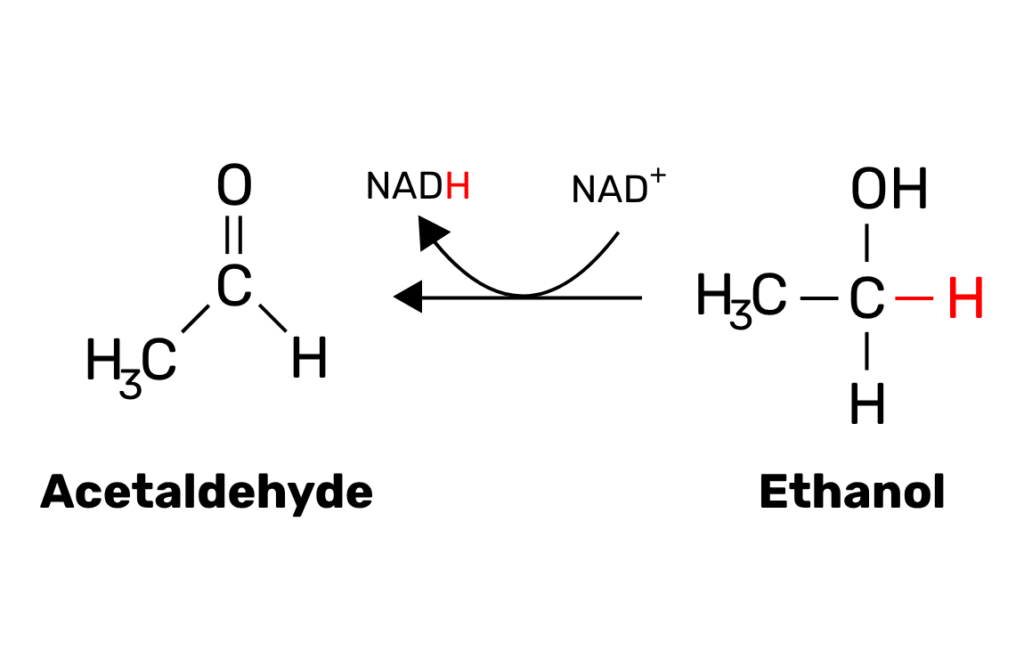
Spoilage can reverse the reaction and turn ethanol back into acetaldehyde.
How to Prevent Acetaldehyde
Because acetaldehyde is volatile, reducing head pressure during fermentation and conditioning lets it blow off naturally. Beyond that, prevention comes down to keeping yeast healthy and giving them time:
- Extend conditioning time — let yeast fully reabsorb and metabolize acetaldehyde
- Lower your pitch rate — fewer cells, less total acetaldehyde produced
- Aerate sufficiently before fermentation — well-oxygenated yeast ferment cleaner
- Ferment cooler — slows production and gives yeast more time to clean up
- Use a less flocculent yeast strain — yeast staying in suspension longer also means staying in contact with acetaldehyde longer, which allows the yeast to metabolize it
- Minimize oxygen exposure post-fermentation — limits bacterial activity that can convert ethanol back to acetaldehyde and prevents any present acetaldehyde from oxidizing into acetic acid
Warning: acetaldehyde oxidizes into acetic acid (vinegar).
FAQ
What does acetaldehyde taste like in beer? Green apple, pear, or fresh-cut grass — often described as a “green” or unripe fruit character.
Is acetaldehyde in beer bad? Not necessarily. Some styles – American lagers and kellerbiers, for example – are acceptable with low levels. However, for most styles, getting above the ~10 mg/L threshold usually signals the beer is under-conditioned or the yeast were stressed.
How do you get rid of acetaldehyde in beer? Give it more conditioning time on the yeast. Healthy yeast will reabsorb and convert residual acetaldehyde into ethanol, resolving the off-flavor.
Does acetaldehyde go away with age? Yes, if the yeast are still viable and active — extended conditioning is the most reliable fix. If oxygen has been introduced post-fermentation, though, the acetaldehyde-ethanol reaction can run in reverse.