
Diacetyl in Beer: Causes, Prevention & How to Test For It

Diacetyl is the compound behind a buttered-popcorn or butterscotch flavor in beer, often paired with a slick, oily mouthfeel. It forms naturally during fermentation and is normally re-metabolized by healthy yeast – so its presence usually means a beer was crashed too early, yeast were stressed, or the beer picked up bacterial contamination somewhere along the way.
What Is Diacetyl?
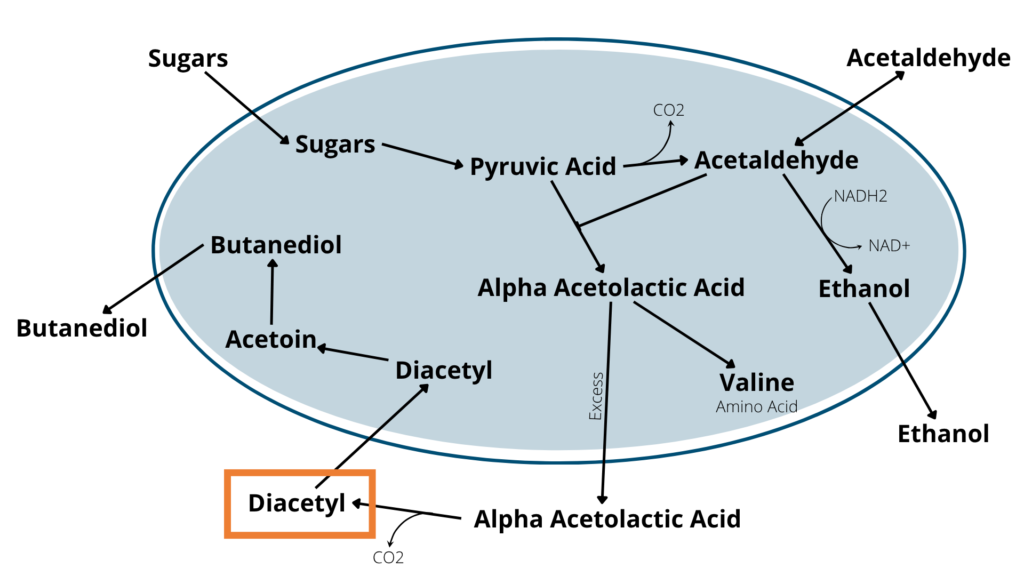
Diacetyl (2,3-butanedione) is one of two vicinal diketones, or VDKs, produced when the precursor alpha acetolactic acid is oxidatively decarboxylated during yeast’s growth phase. The other, 2,3-pentanedione, carries a similar flavor at roughly one-tenth the intensity. Under normal conditions, yeast re-metabolize both compounds either in late-stage fermentation or during conditioning into flavor-less compounds. Problems start when production outpaces metabolization, conditioning is cut short, or certain types of bacteria are present.
Quick facts:
- Flavor/aroma: buttered popcorn, butterscotch, slick mouthfeel
- Sensory threshold: ~0.1–0.15 mg/L
- Trouble zone: 0.2–0.3 mg/L — beer becomes unstable and can turn raunchy, especially with oxygen present
- Style note: may be desirable to a degree in many ales
What Causes Diacetyl in Beer?
Most causes come down to yeast producing more diacetyl than they have time or health to metabolize, though bacteria and wild yeast can also be a diacetyl source.
- Long lag time — the longer wort sits before active fermentation starts, the more opportunity for VDK precursor buildup and bacterial growth
- Insufficient or over-aeration — oxygen drives the redox reactions that form diacetyl, so both underdoing and overdoing aeration can throw this off
- Low nutrient levels, especially valine — this amino acid deficiency is more common in low-malt-containing worts and increases a yeast’s diacetyl precursor production, ulimately increasing the total diacetyl present in the wort/beer
- High pitch temperature — warm wort accelerates diacetyl formation, sometimes faster than yeast can clean it up before cell death
- Low pitch rate — fewer healthy cells means slower, less complete re-metabolism
- Bacterial contamination or wild/mutant yeast — bacteria and wild yeast can produce diacetyl directly, and mutant brewing yeast strains are often good diacetyl producers but poor diacetyl reducers; unclean tap lines are a common source
Dirty draft line are a major culprit for introducing diacetyl to beer!
How to Prevent Diacetyl
- Condition beer on the yeast — give them time to continue metabolizing and reabsorbing diacetyl rather than racking early
- For lagers, use a Diacetyl Rest — a temporary rise in temperature near the end of fermentation reactivates yeast enough to clean up residual VDKs
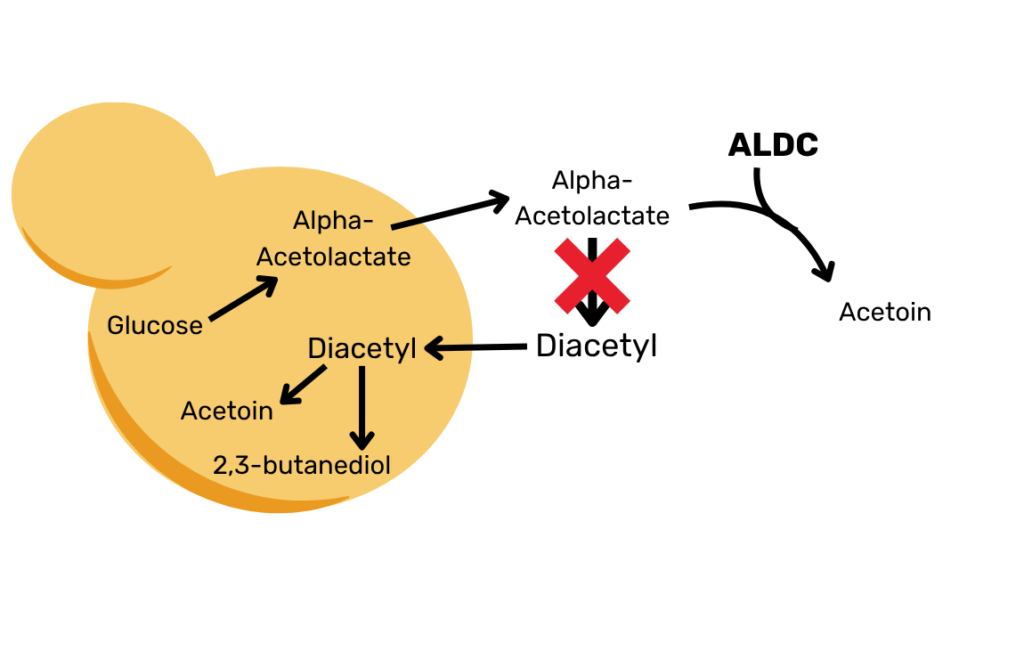
- Use ALDC when pitching — alpha-acetolactate decarboxylase is an enzyme that converts alpha-acetolactate directly to acetoin, bypassing the diacetyl step entirely
- Keep pitch rate and temperature in range — healthy, appropriately sized pitches reduce the odds of excess production in the first place
- Keep tap lines and transfer paths clean — bacterial contamination is one of the few sources yeast can’t reabsorb their way out of
How to Test for Diacetyl: The Force Diacetyl Test
- Heat a sample to 60–70°C (140–160°F) for 10+ minutes — this forces any remaining precursor to convert to diacetyl, revealing levels that would otherwise show up later in the package
- Optional (but suggested): cool the sample back to room temperature
- Smell for diacetyl — buttery or butterscotch character indicates the beer needs more time conditioning before packaging
FAQ
Is diacetyl always a flaw in beer? Not necessarily. Low levels are desired to a degree in many ale styles. It becomes a problem once it climbs into the 0.2–0.3 mg/L range, where it turns unstable and raunchy — especially with oxygen exposure.
What does diacetyl taste like in beer? Buttered popcorn or butterscotch, often with a slick or oily mouthfeel.
How do you get rid of diacetyl in beer? Let the beer condition on the yeast longer so they can reabsorb and metabolize it. Lagers may benefit from a temporary diacetyl rest at a warmer temperature near the end of fermentation. However, once the yeast is removed from the beer, you are stuck with it. Using ALDC at pitching prevents it from forming in the first place.
How do you test for diacetyl? Run a Force Diacetyl Test: heat a sample to 60–70°C (140–160°F) for at least 10 minutes, cool it back down to room temperature, then smell for buttery or butterscotch character.
How does ALDC work? Alpha-Acetolactate Decarboxylase is an enzyme that converts the alpha-acetolactate produced by yeast directly to acetoin, a flavor-neutral compound. This prevents the alpha-acetolactate from ever oxidizing into diacetyl.