
DMS in Beer: Causes, Prevention & How to Fix It
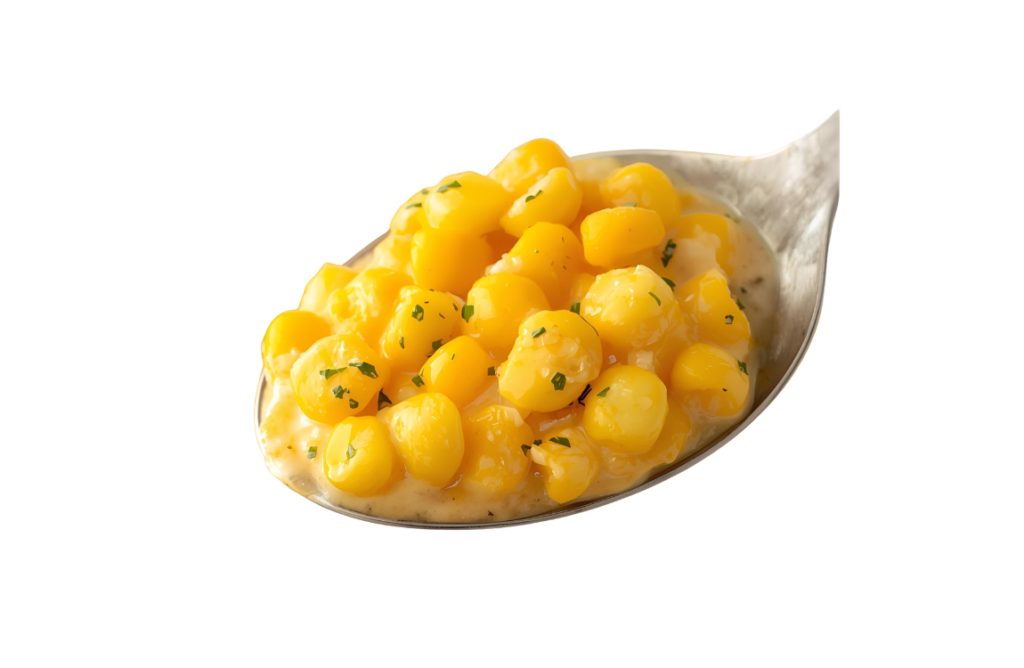
DMS (dimethyl sulfide) is the compound behind a cooked-vegetable, creamed-corn, or stewed-tomato flavor in beer. It’s produced continuously in wort during the boil, and while a low level may be desired to a degree in some lagers, too much usually means the boil condensation is falling back into the kettle, the wort wasn’t cooled fast enough, or bacteria got involved.
What Is DMS?
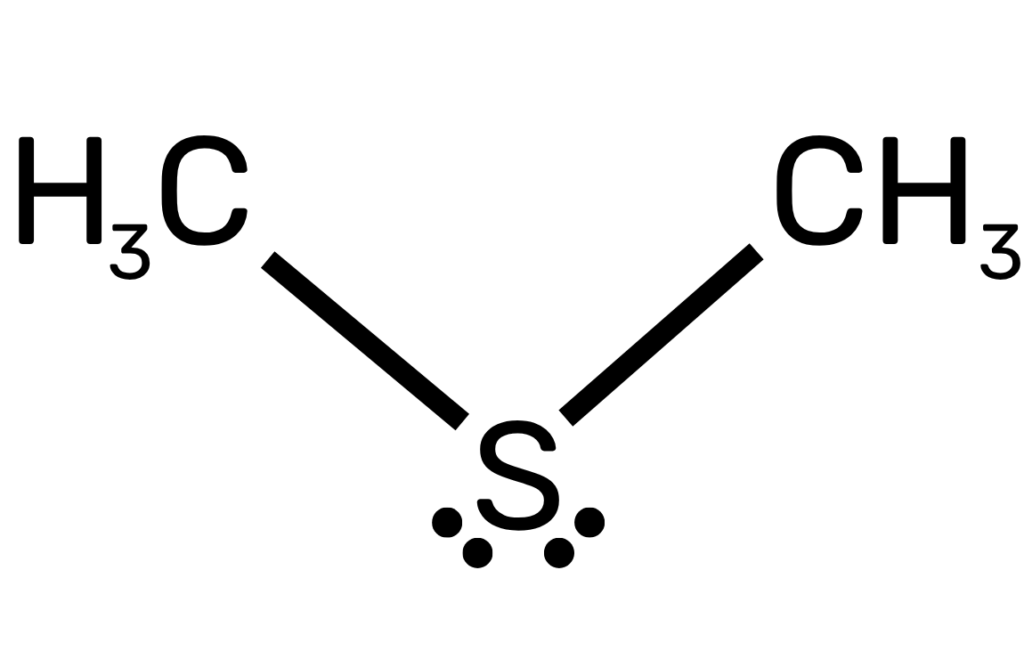
DMS forms when SMM (S-methyl-methionine) – a flavorless compound that develops in the barley embryo during germination – breaks down under heat. SMM is heat sensitive and some of it is lost during kilning (lighter kilning = less loss), but whatever survives into the brewhouse converts to DMS once wort passes 70°C (158°F).
During the boil, that conversion is fine: the same heat that produces DMS also volatilizes it. There are two main problems from there: 1) the volatilized DMS condenses and drips back into the kettle if it isn’t removed, usually via an exhaust fan, and 2) the hot wort stand – the period after the boil ends but before the wort is chilled – where DMS keeps accumulating without anywhere to vent. That’s why fast chilling and transfer matter as much as the boil itself.
Quick facts:
- Flavor/aroma: cooked vegetables, creamed corn, stewed tomatoes
- Sensory threshold: ~25–50 μg/L
- Formation: heating malt/wort above 70°C (158°F)
- Chemical role: thermal conversion from SMM to DMS, continuously produced during the boil and hot wort stand
What Causes DMS in Beer?
DMS is the result of a thermal decomposition of SMM, a compound developed in the barley embryo during germination. When SMM is heated above 70°C (158°F), it coverts into DMS, and unless removed from the wort, will remain in the final product. This can come from a few process steps.
- Inproper venting during the boil — SMM converts to DMS throughout the boil and volatilizes. If the steam is allowed to condense, drop back in the kettle, and isn’t re-volatilized, all of that DMS will remain in the final product. Proper ventilation via a stack fan is vital for moving the DMS out and away.
- Long hot wort stand time — Even without an active boil, DMS keeps forming as long as the temperature is above 70°C (158°F). However, without the boil to volatilize the DMS, it remains in solution and ultimately the final beer.
- Slow cooling — The longer wort takes to drop from boil temperatures to below the 70°C (158°F) threshold, the more DMS accumulates. Make sure you have a heat exchanger appropriately sized for your production.
- Bacterial contamination — Certain bacteria, notably Obesumbacterium (aka Flavobacterium), can produce DMS directly.
How to Prevent DMS
- Let it vaporize during the boil — a vigorous, open boil is what carries DMS out of the wort; don’t cover the kettle completely or let condensation collect on a lid and drip back in!
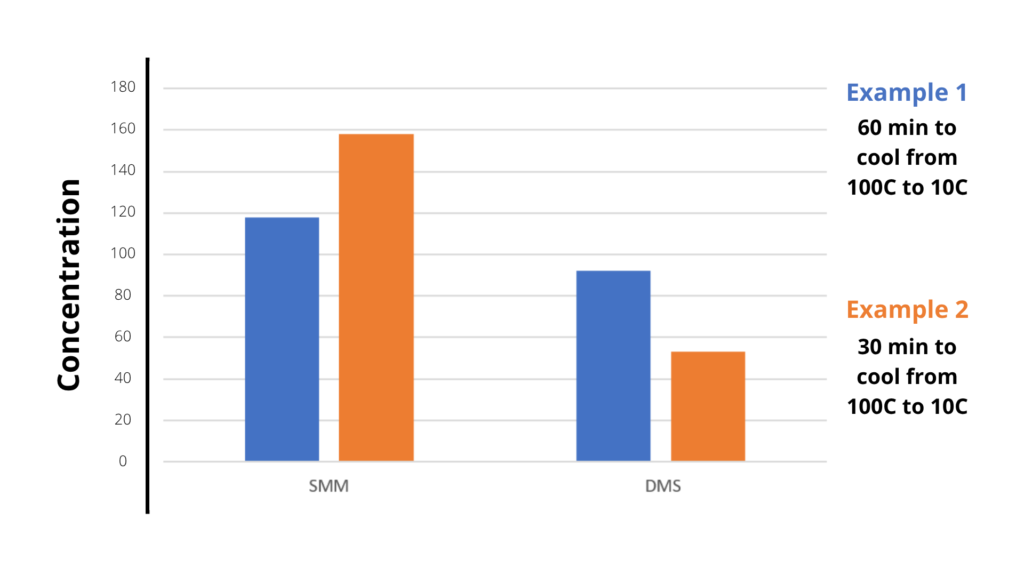
- Cool quickly to stop production — minimizing time above 70°C (158°F) limits how much additional DMS forms after the boil ends. (See graph below)
- Sanitary practices — good sanitation limits bacterial contamination from Obesumbacterium and similar organisms.
Cooling rate makes a measurable difference. In side-by-side trials cooling wort from 100°C (212°F) to 10°C (50°F), it was found that cooling in 30 minutes formed less DMS – leaving more SMM – than cooling over a 60 minute period.
How to Fix DMS
Some scrubbing happens naturally from CO2 release during fermentation and force carbonation, but this usually isn’t enough on its own to bring a high-DMS batch back below sensory threshold. Prevention during the boil and cool-down is the more reliable fix and better brewing practice.
Things don’t always go as planned, however, and for this off-flavor, there is a convenient fix.
- Scrub with CO2 or N2 — Because DMS can easily volatilize, purging with an inert gas can help strip DMS that’s already dissolved in finished or near-finished beer. It may not strip it all, but it will significantly improve the beer.
FAQ
Is DMS always a flaw in beer? Not necessarily. A low level may be acceptable to a degree in some lagers, but in most styles it is considered a flaw.
What does DMS taste like in beer? Cooked vegetables, creamed corn, or stewed tomatoes.
How do you get rid of DMS in beer? Prevention is more reliable than a fix: boil vigorously with the kettle uncovered so DMS can vaporize out, then cool the wort quickly through the 70°C (158°F) threshold to stop further conversion. Once DMS is already in the beer, scrubbing with CO2 or N2 can help, though it’s not a guaranteed fix for high levels.
What causes DMS in beer? SMM from the barley converts to DMS above 70°C (158°F), continuously during the boil and during the hot wort stand. Slow cooling and bacterial contamination (especially Obesumbacterium) both make it worse.
Does cooling speed actually affect DMS levels? Yes. Cooling wort from 100°C to 10°C in 30 minutes instead of 60 measurably reduces both remaining SMM and total DMS produced.